We’re now booking our 1:1 October Half-Term Crash Course at Wimbledon College, Wimbledon Village (SW19), running Monday 26th to Friday 30th October 2026. We serve families across Wimbledon, Putney, Fulham, Wandsworth and Kingston. View Half-Term Dates & Book Online Here →
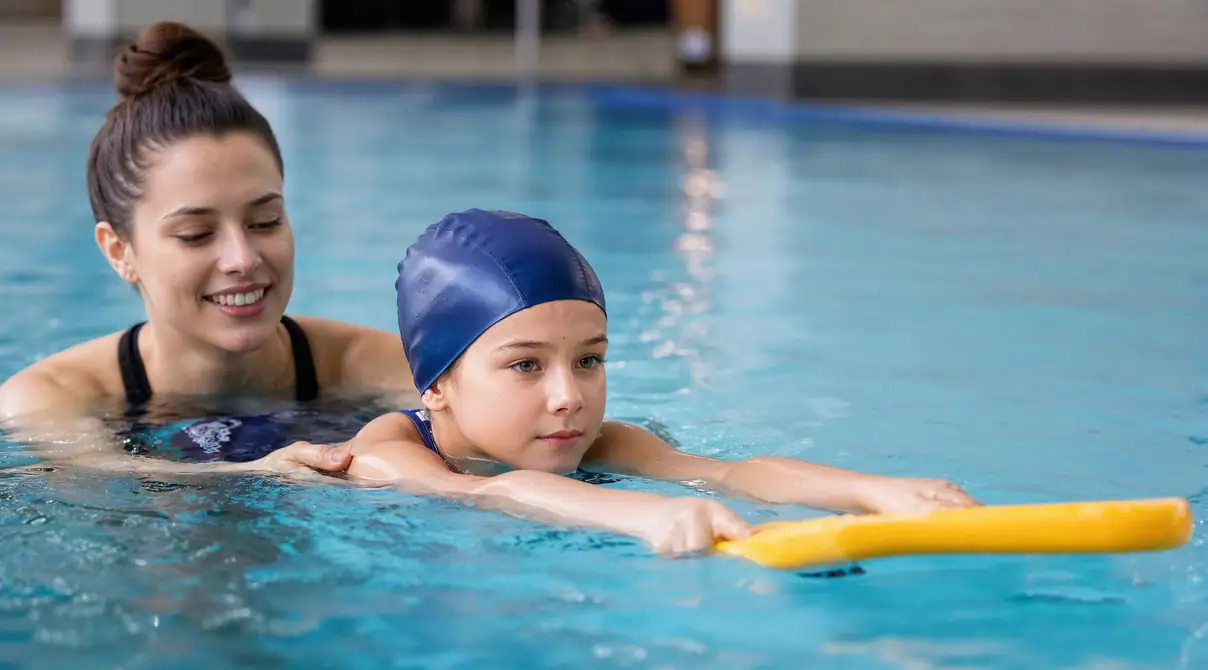
Swimming crash courses are 4-day or 5-day intensive courses run during the school holidays. Lessons take place every weekday morning, giving rapid progress through daily repetition.
Yes. Both terms refer to our daily holiday programme, designed for fast-tracked learning and skill retention.
Our intensive courses run during the major school breaks:
No. Because our lessons are 1:1, they suit all ages. We offer specialised 1:1 Adult Intensives and 1:1 SEND lessons tailored to individual learning needs.
Not at all. We often help club-level swimmers refine their stroke technique for school squads, and triathletes who want to improve their freestyle efficiency and stamina.
Yes! A 1:1 adult intensive is the fastest way to build water confidence and breath control before a holiday or before starting a regular fitness routine.
Daily lessons remove the “7-day gap” in which skills can be forgotten. This daily repetition often results in two terms’ worth of progress in just one week.
Our October half-term course runs at Wimbledon College in Wimbledon Village (SW19). It’s easily reached from Wimbledon, Putney, Fulham, Wandsworth and Kingston.
Holiday lessons typically run in the morning, so families can finish early and enjoy the rest of the day.
Standard sessions are 30 minutes. 60-minute “double sessions” can be arranged for older children and adults who want maximum impact.
Technically yes, but we find that more than 60 minutes of intensive technical work a day can be counter-productive for skill retention.
The minimum booking is one full weekly block of 4 or 5 days, depending on bank holidays. The October half-term course runs for the full 5 days.
No. Crash courses are booked as a full intensive week only. We don’t offer pay-as-you-go, ad-hoc or individual-day bookings, because daily repetition across the whole week is what delivers the rapid progress our courses are known for.
Our current pricing and live availability are on our Dates and Fees page.
No. We specialise exclusively in 1:1 and semi-private 1:2/1:3 (siblings/friends) lessons, so every swimmer gets focused attention.
Because slots are reserved exclusively for your child, we can’t offer refunds or make-up sessions for days missed during the intensive week.
Blue Wave provides a professional private pool and expert technical coaching. We don’t use small backyard pools or large, crowded groups.
They’re an excellent boost to jump to the next level, but we recommend regular weekly lessons for long-term technical progress.
Every child is different, but a week of intensive lessons gives a big boost in confidence and foundational skills that would normally take months to build.
We tailor the week to each swimmer:

A good swim school with professional staff


Blue Wave Swim is an outstanding swim school that I would highly recommend. The teachers are professional, patient, and genuinely care about every child’s progress. They keep a watchful eye on each swimmer, making safety their top priority while building confidence in the water.(May Achour July 2026).

October 6, 2026, Google Reviews
Highly Recommended. Our girls, two sisters aged 7 and 5, loved the teacher, looked forward to their semi-private courses, and made significant progress in two weeks (Mr B Mashhoodi September 2026).

October 6, 2026, Google Reviews
My son has been going to swimming lessons at Blue Wave in Wimbledon for a few years now and thoroughly enjoys it. The teaching is great and the lessons well run. Helps to prepare him for when we finally get to go on holiday again!

September 26, 2020, www.yell.com
Highly recommend
Highly recommend this swimming school. My daughter has been attending since she was 1 years old and she loves it. The teachers are very good with children and my daughter, who is now 4 years old is very confident in the water.

August 23, 2019, www.yell.com
Great
My daughter loves swimming! Since attending Blue Wave Swim School lessons her water confidence is high and that gives us peace of mind when she is playing near water. The staff are fantastic and the lessons are fun!

August 23, 2019, www.yell.com
Excellent Wimbledon Swimming School
Our children, now ages 9 and 7, have been taking lessons with Blue Wave since early 2017. They have made great progress with their swimming skills. We have been very impressed with the teaching and personalised attention both children have received. Best of all they enjoy and look forward to their lessons. The location is also convenient for Wimbledon residents.
August 23, 2019, www.yell.com
Kids love coming and I can see the development over the weeks. I can see the teachers laying down foundations for a lifetime of swimming – very reassuring as a parent and exactly why you choose a swimming school rather than go it alone
August 23, 2019, www.yell.com