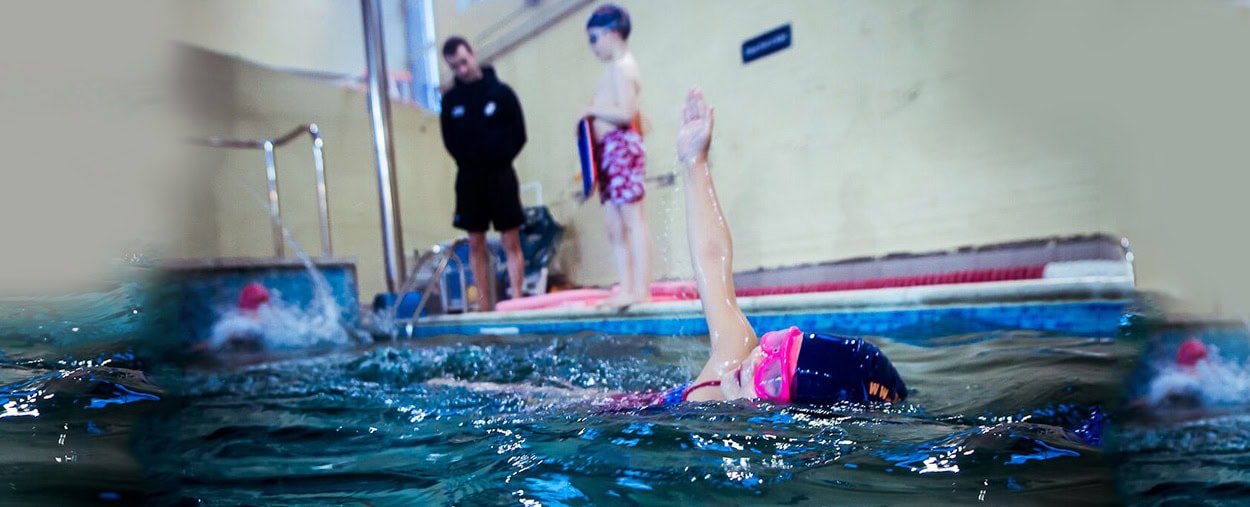
Many parents assume that if their child has done school swimming, they are “safe in the water”. But national and local evidence suggests the reality is more complicated.
By the end of primary school, children in England are expected to swim competently, confidently and proficiently over at least 25 metres, use a range of strokes effectively, and perform safe self-rescue in different water-based situations. These are part of the national curriculum for swimming and water safety.
On paper, that sounds reassuring. In practice, the 25-metre target can create a false sense of security.
Being able to get across a pool once is important. But it is not the same as being a confident, technically capable swimmer. A child may be able to cover 25 metres but still struggle with breathing, body position, stamina, deep-water confidence, safe self-rescue, or correct stroke technique.
For families across South West London, this matters.

The latest Sport England Active Lives Children and Young People Survey reported that 25% of Year 7 children in England cannot swim 25 metres unaided by the time they leave primary school (1 in 4 primary school children). The report states in academic year 2023-24 that only 70% of Year 7 pupils (aged 11-12) can swim competently, confidently and proficiently over a distance of at least 25m.
Swim England welcomed the improvement in the latest figures, but the wider picture still shows that a significant number of children are reaching secondary school without this basic swimming capability.
And in parts of South West London, the local picture may be even more concerning.
Merton School Sport Partnership states that, based on its School Sports Mark survey, around 53% of Year 6 children could swim 25 metres when they completed their school swimming programme in 2024/25. The organisation describes it as concerning that in the London borough of Merton “almost half” of students leave primary school unable to swim 25 metres.
That is not a perfect like-for-like comparison with the national Year 7 figure, but it is an important local warning sign. It suggests that in at least some South West London communities, many children may still be leaving primary school without the level of swimming confidence parents expect.
South West London councils are already responding
The need for extra swimming support is not theoretical.
In Wandsworth, for a limited age range, free holiday swimming lessons are available for those who are currently unable to swim 25 metres. In 2025, Richmond offered free crash courses for children in years 5, 6 and 7 who have not attained the Key Stage 2 swimming requirement and are unable to swim to the expected level for their age.
These schemes are valuable and should be welcomed. But their existence also highlights a bigger issue: many children still need catch-up swimming support at the end of primary school or even after they have started secondary school.
The 25-metre target matters. It gives schools, parents and policymakers a clear minimum standard.
But the problem is when 25 metres is treated as the finish line. Actually, Swim England defines a confident and competent swimmer as a swimmer who can swim 100 meters continuously (4 laps of a typical pool) with a variety of strokes.

A child who can swim 25 metres may still be far from water confident. Some children may only manage the distance with poor technique. They may be exhausted at the end. They may panic if splashed, pushed underwater or asked to swim in deeper water. They may not be able to tread water, float calmly, turn safely, or swim back to the side.
That distinction matters because real-life water safety is rarely as simple as swimming one calm length in a controlled pool.
Good swimming is not just about distance. It is about confidence, control, breathing, stamina, technique and judgement.
School Swimming Teaches Survival First
School swimming plays an important role. For many children, it is their first structured experience in the water. It introduces water safety, builds basic confidence, and helps schools work towards the national curriculum requirements.
But parents should understand what school swimming usually is — and what it is not.
Because school swimming is often delivered in short blocks, with large groups and mixed abilities, the main focus is usually personal survival. The priority is often:
Can the child get across the pool safely?
That is different from asking:
Is the child developing strong, efficient technique across all four strokes?
In many school swimming lessons, front crawl may be taught mainly as a way to cover 25 metres. There may not be enough time to refine breathing, body position, kicking, arm recovery, rotation or timing.
Backstroke may be introduced through floating or kicking on the back, but full backstroke technique may receive limited attention.
Breaststroke is often harder to teach properly in a school swimming setting because the leg action and timing require close correction.
Butterfly is rarely taught in school swimming because it is an advanced stroke and not essential for basic survival.
Diving is usually only introduced to children who are already confident swimmers, because safe diving requires depth awareness, body control and the ability to swim away safely after entry.
This does not mean school swimming is failing. It means school swimming has different aims and objectives.
Its job is to introduce essential water safety and help children reach a minimum standard. It is not usually designed to provide long-term technical stroke development.

The national curriculum says pupils should be taught to use a range of strokes effectively, including examples such as front crawl, backstroke and breaststroke.
But in reality, many children leave school swimming with uneven ability.
Children may have a basic front crawl but poor breathing or learn to kick on their back but not swim efficient backstroke.
It is unlikely children learn to swim breaststroke properly and very unlikely school swimming covers butterfly.
Therefore, children may be able to swim one length but lack the confidence to swim continuously.
This is the four-stroke gap and poor technique can limit confidence and endurance.
It matters because each stroke develops different skills. Front crawl builds rhythm, breathing and body position. Backstroke develops balance and confidence on the back. Breaststroke helps with survival swimming, orientation and controlled movement. Butterfly, although more advanced, develops strength, timing and body awareness.
Children do not need to become competitive swimmers. But they do benefit from learning more than one way to move safely and confidently through the water.
Why free swimming and crash courses help — but are not always enough
Free swimming sessions and council-funded crash courses are useful. They reduce cost barriers and give children extra water time.

A five-day crash course can help a child gain confidence quickly. A free swim can help families practise. But children who are nervous, inconsistent or technically weak usually need regular lessons, repetition and individual correction.
Swimming is a skill built through practice. Like reading, music or gymnastics, progress depends on consistency.
A child may understand what to do after one week of lessons, but still need months of practice before the movement becomes natural and reliable.
That is especially true for children who are anxious in the water, have missed lessons, had limited pool access, or reached Year 5 or Year 6 without strong foundations.
What parents should look for beyond 25 metres
If your child can swim 25 metres, that is a good achievement. But it should not be the only measure of progress.
Can my child…
A child who can swim 25 metres but dislikes swimming, panics easily, or uses poor technique may still need support.
Why technique matters for water safety
Technique is sometimes seen as something only competitive swimmers need. That is a mistake.
A child with poor technique may be able to swim one length in a warm pool, but struggle when they are tired, cold, surprised or out of their depth. Poor breathing can lead to panic. Poor body position can make swimming exhausting. Weak kicking can make it hard to stay horizontal. Limited stroke choice can reduce a child’s ability to cope in different situations.
Technique is not just about looking good in the water.
It is about efficiency, confidence and safety.
If your child is currently doing school swimming, ask the school what they are working towards. Find out whether your child can swim 25 metres, use a range of strokes and perform safe self-rescue.
With school swimming done for one term for one year or two at school, do not assume children are water-safe. Watch how they swim. Look at their confidence, technique and stamina.
If they are struggling, consider extra lessons before the gap widens. This is especially important in Years 4, 5, 6 and 7, when children may be approaching secondary school but still lack water confidence.
For children who can already swim 25 metres, the next step is not simply “more lengths”. It is better technique, better breathing, stronger strokes and greater confidence.
The real goal: confident, capable swimmers
The 25-metre target is important – the beginning of swimming confidence, and not the end.
School swimming, free sessions and crash courses all have a role to play. They help children access the water and learn essential survival skills.
But for many children, they are not enough on their own.
To become genuinely confident swimmers, children need regular practice, clear progression and proper stroke development. They need to learn not just how to get across the pool, but how to move through the water safely, efficiently and calmly.
That is the real difference between simply reaching 25 metres and becoming a swimmer.
For South West London parents, the message is simple:
Do not stop at 25 metres. Use it as a milestone — not the finish line.
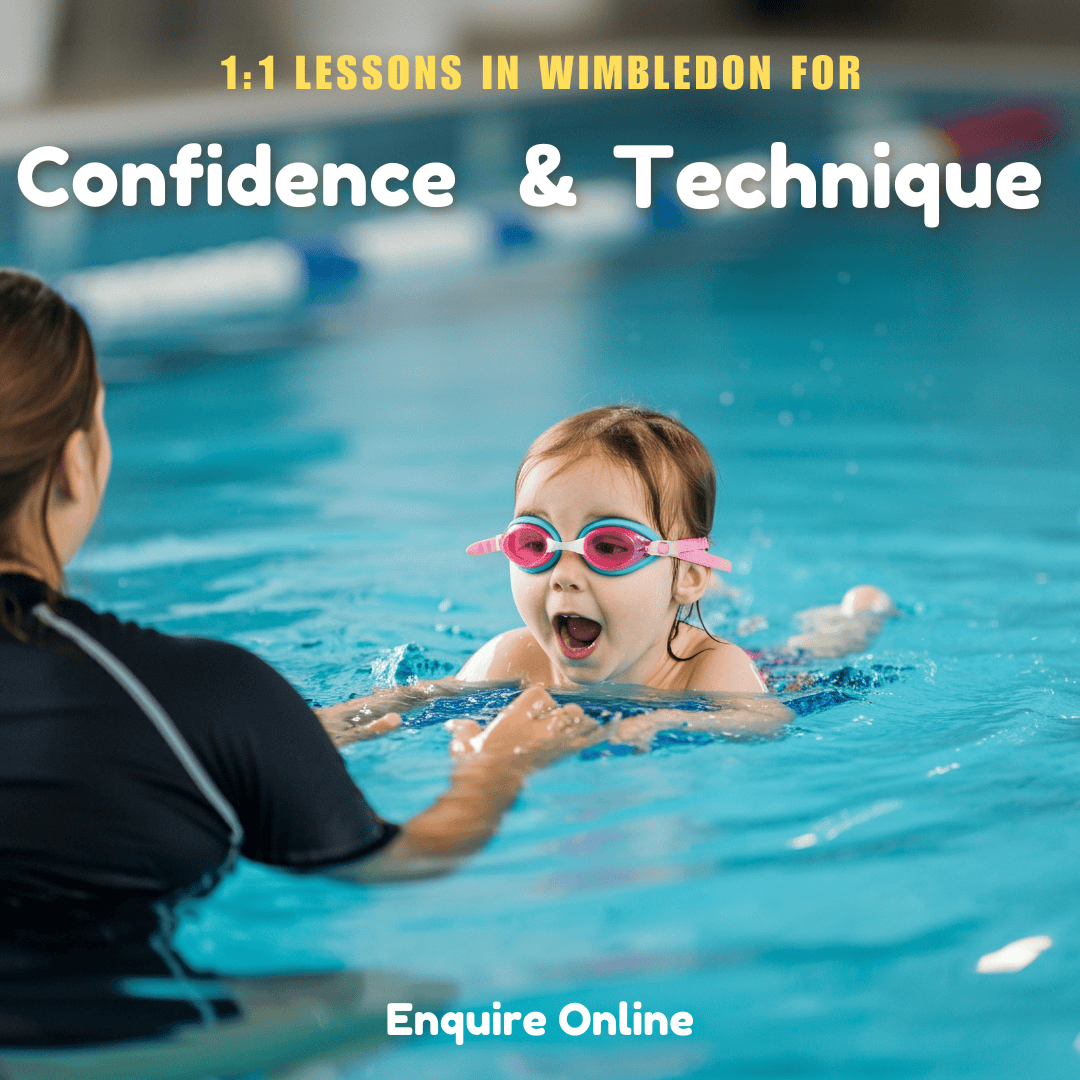
Enquire About Our Swim Lessons

A good swim school with professional staff


Blue Wave Swim is an outstanding swim school that I would highly recommend. The teachers are professional, patient, and genuinely care about every child’s progress. They keep a watchful eye on each swimmer, making safety their top priority while building confidence in the water.(May Achour July 2026).

October 6, 2026, Google Reviews
Highly Recommended. Our girls, two sisters aged 7 and 5, loved the teacher, looked forward to their semi-private courses, and made significant progress in two weeks (Mr B Mashhoodi September 2026).

October 6, 2026, Google Reviews
My son has been going to swimming lessons at Blue Wave in Wimbledon for a few years now and thoroughly enjoys it. The teaching is great and the lessons well run. Helps to prepare him for when we finally get to go on holiday again!

September 26, 2020, www.yell.com
Highly recommend
Highly recommend this swimming school. My daughter has been attending since she was 1 years old and she loves it. The teachers are very good with children and my daughter, who is now 4 years old is very confident in the water.

August 23, 2019, www.yell.com
Great
My daughter loves swimming! Since attending Blue Wave Swim School lessons her water confidence is high and that gives us peace of mind when she is playing near water. The staff are fantastic and the lessons are fun!

August 23, 2019, www.yell.com
Excellent Wimbledon Swimming School
Our children, now ages 9 and 7, have been taking lessons with Blue Wave since early 2017. They have made great progress with their swimming skills. We have been very impressed with the teaching and personalised attention both children have received. Best of all they enjoy and look forward to their lessons. The location is also convenient for Wimbledon residents.
August 23, 2019, www.yell.com
Kids love coming and I can see the development over the weeks. I can see the teachers laying down foundations for a lifetime of swimming – very reassuring as a parent and exactly why you choose a swimming school rather than go it alone
August 23, 2019, www.yell.com